Introduction
On a cold winter morning in Fall River, Massachusetts, a mother pushes her shopping cart past the brightly-lit aisles. She pauses – not to grab cereal or a toy, but to step into the warehouse of her local food bank. While she used to rely solely on her paycheck, now she comes here to fill in the gaps: putting food on the table, keeping her children warm, staying afloat.
This scene is echoed across the United States. Behind every food-box distributed and every shelf replenished in our communities lies the story of how the system works — how food is sourced, how funding flows, how volunteers show up, and how the rising need tests every link in the chain.
How Food Banks Source Food & Funding
Food banks aren’t simply warehouses of charity; they are complex operations that depend on multiple channels of supply and finance.
Food sourcing:
- Many banks receive direct donated food: shelf-stable items from food drives, surplus produce from farmers, unsold goods from manufacturers or retailers. According to Feeding America, many of the food that ends up at families comes from donations by individuals, businesses and farmers. Feeding America+2Feeding America+2
- But donations alone don’t cover demand. Some food banks have had to purchase food more than ever. One article noted that after the pandemic, many food banks increased the portion of food they buy because donated goods were less reliable. Food Bank News
- Food banks also rely on federal commodity programs: for example, the The Emergency Food Assistance Program (TEFAP) is a key federal program that helps buy food or provide commodity food to food banks. Second Harvest of the Greater Valley+2Feeding America+2
Funding & finances:
- Government grants (federal, state, local) contribute. For example, the USDA supports programs that partner with food banks. Feeding America+2Second Harvest of the Greater Valley+2
- Private donations (individuals, foundations, businesses) play a large role. As one summary stated, “food banks depend on a mix of government grants, private donations and foundation support.” Foundation Search
- In-kind donations (food, storage, transportation) reduce costs but require infrastructure (warehousing, volunteers, trucks).
- Grants for food pantries and food banks are available. For example, in California there are specific grant listings for food pantries. Instrumentl
The Major Challenges Facing Food Banks Now
While food banks have always operated under pressure, several emerging headwinds are making their mission harder.
Rising demand + cost pressures:
- In 2023, about 13.5 % of U.S. households were food insecure – up from 12.8 % the year before. Route Fifty+1
- Inflation and higher grocery prices mean that people who previously weren’t eligible for help are now turning to food banks. Simultaneously, the cost for food banks to buy or store food has increased. PBS+1
Funding uncertainty and federal cuts:
- In 2025, the United States Department of Agriculture (USDA) ended or paused several programs that had supported food banks buying food from farms and local producers. CBS News+2Channel 13 Las Vegas News KTNV+2
- One article reports that in Southern Nevada a food bank anticipates a shortfall of up to five million pounds of food this year as a result of federal funding cuts. Channel 13 Las Vegas News KTNV
- The Freeze/withdrawal of $500 million in TEFAP funding has been widely reported and linked to increased strain on food banks. Equal Justice Initiative
Logistical & access barriers:
- In rural or underserved areas, limited transportation, fewer grocery stores, and greater distances make distribution harder. For example, one food bank in Arizona is using GIS mapping to track pockets of need and access issues. Route Fifty
- Storage, refrigeration, shelf life, distribution networks all factor in. Food banks can receive donated produce or fresh food, but they must have the infrastructure to store and deliver it.
Volunteer and supply chain challenges:
- The pandemic disrupted volunteer supply and some donor supply chains. Some food banks had to shift toward purchasing more food rather than relying solely on donations. Food Bank News
- Donations of unwanted or excess food are beneficial, but require sorting, transporting, and storing which all cost money/time.
How You Can Help: Donation, Volunteering & Advocacy
If you feel moved by what food banks are doing and want to support your community (or your state), here are meaningful ways to contribute:
- Donate food and goods:
- Organize a food drive in your local community (church, school, work).
- Donate shelf-stable items: canned proteins, healthy staples, baby foods, feminine hygiene products (these often go un-donated).
- Ask your favourite grocery store or supplier if they donate surplus goods.
- Monetary donations:
- Cash donations help food banks purchase foods that donations may lack (fresh produce, proteins, regional specialties).
- Supporting foundation grants or local government helps bolster infrastructure.
- Volunteer your time or skills:
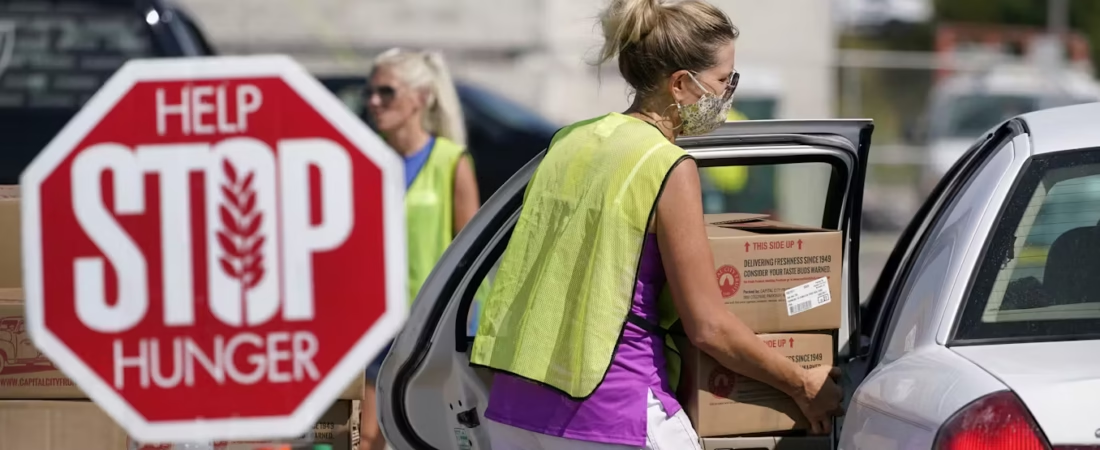
- Sorting, packaging, driving, delivering, helping at distribution events.
- Professional skills: social-media support, graphic design, logistics, data mapping (many food banks are using technology to better locate need) as in the Arizona example. Route Fifty
- Consider sponsoring or volunteering for mobile food bank programs in rural or underserved zones.
- Advocate & raise awareness:
- Use your social channels to spotlight your local food bank: post photos, share impact stories, highlight donation drives.
- Contact your state and local representatives to raise the issue of hunger and food insecurity: emphasize how funding cuts impact communities.
- Nominate or recognize food-bank leadership, volunteers or programs for local awards (see next section).
- Nominate and support recognition/award opportunities:
- Many states or counties have “Community Service Awards”, “Volunteer of the Year”, “Nonprofit Impact Awards” or “Hunger Relief Awards”.
- Encourage your food bank to apply for grants that include recognition or be featured in local media: this raises the profile and can attract more donors.
Recognition & Awards: Elevating the Heroes Among Us
Food-banks often operate quietly, but shining a light on them can amplify their impact.
- Many community foundations have annual awards for nonprofits in categories like “Meeting Basic Needs,” “Community Service,” “Volunteer Impact,” etc. Encourage food banks to look into their regional foundation or United Way affiliate.
- Local governments sometimes include awards for nonprofits in their civic mountains (e.g., “City of ___ Award for Community Impact,” “Governor’s Award for Volunteer Excellence”).
- Social-media campaigns: create hashtags (e.g., #HungerHeroes, #BehindTheShelves) and partner with local influencers or businesses to nominate a food-bank or volunteer each month.
- Corporate partnerships: Many grocery chains or food-related businesses have community awards or grants for hunger-relief organizations — check with major retailers or wholesalers in your region.
Including such recognition doesn’t just bring prestige — it often translates into more donors, more volunteers, and more public awareness, which directly supports the mission.
Conclusion & Call to Action
The shelves may look full. The volunteers may look busy. But behind the scenes, food banks are navigating a shifting landscape: rising need, tightening budgets, evolving supply chains.
This is where you come in. Whether it’s dropping extra cans into the donation bin, switching your business marketing to include a local food-bank partnership, nominating a volunteer for that spotlight award, or simply sharing the story of hunger in your community on Instagram — your action matters.
Because hunger touches us all, and when we shine light on the programs, the people and the partnerships that keep food flowing, we strengthen our community. The human price of hunger is real—but so is the human power of generosity.
Head over to your local food bank today. Ask them: What do you need most? How can I help? Then do that.